126min 4 ppl

154 min · 14 steps
Hard: over 60 min or 12+ steps
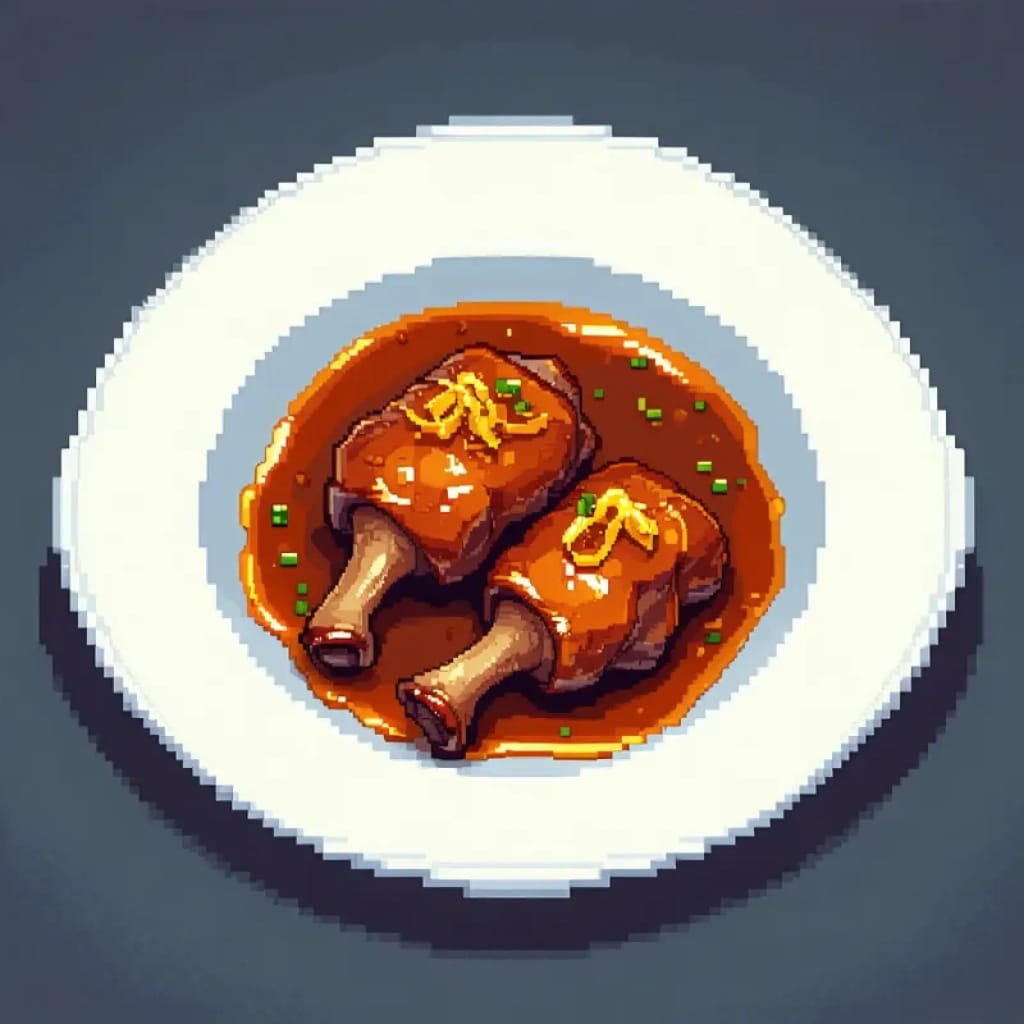
Whole duck legs are slow-roasted until the fat renders completely, then finished in a sauce built on a proper gastrique — caramelised sugar deglazed with red wine vinegar — for the classic sweet-sour depth that sets an authentic duck à l'orange apart.
Dairy, Celery, Sulphites
Meat
Fresh Produce
Meat & Poultry
Dairy & Eggs
Tins & Jars
Dried Goods
Spices & Seasonings
Oils & Condiments
Pat the duck legs completely dry with paper towels. Score the skin in a crosshatch pattern with a sharp knife, cutting through the fat but not into the flesh. Season all over with salt and pepper.
Rest the seasoned duck legs uncovered on a rack in the refrigerator for at least 4 hours, or overnight, to dry the skin further.
Preheat the oven to 160°C (fan 140°C or 325°F). Place the duck legs skin-side down in a cold, heavy ovenproof skillet or Dutch oven, then set over medium heat. Render without moving for 12–15 minutes until the skin is deep golden and releases easily from the pan.
Flip the duck legs and sear the flesh side for 3 minutes until lightly browned, then transfer to a plate.
Pour off all but 2 tablespoons of rendered duck fat from the pan, then add the carrot, celery, onion, and garlic. Cook over medium heat, stirring occasionally, for 6–8 minutes until softened and lightly golden.
Add the thyme, bay leaves, and white wine. Increase heat to medium-high and simmer for 4–5 minutes until the wine is reduced by half, scraping up any browned bits from the base.
Add the stock and bring to a gentle simmer, then nestle the duck legs back in skin-side up. Transfer to the oven, uncovered, and braise for 75–80 minutes until the skin is lacquered and the internal temperature reads 82°C on a meat thermometer inserted into the thickest part away from the bone.
Meanwhile, make the gastrique: combine the caster sugar and 1 tablespoon of water in a small saucepan over medium heat. Cook without stirring for 5–6 minutes until the sugar turns a deep amber caramel.
Remove the caramel from the heat and carefully pour in the red wine vinegar — it will sputter. Return to medium heat and stir for 1–2 minutes until smooth, then pour in the orange juice and the orange zest. Simmer for 8–10 minutes until reduced by one third.
Transfer the cooked duck legs to a warm plate and tent loosely with foil. Strain the braising liquid through a fine-mesh sieve into the gastrique, pressing the vegetables firmly. Discard the solids.
Bring the combined sauce to a brisk simmer over medium-high heat and reduce for 10–12 minutes until it coats the back of a spoon.
Stir in the cornflour slurry and simmer for 1 minute until the sauce is glossy and lightly thickened.
Remove the sauce from the heat and whisk in the cold butter cubes one at a time until emulsified and glossy. Taste and adjust seasoning.
Arrange the duck legs on warmed plates, spoon the sauce generously over the top, and garnish with the fresh orange segments.