
50min 4 ppl

52 min · 12 steps
Medium: 31–60 min or 7–12 steps
Macerating lemon zest into the sugar before it ever touches the base concentrates the citrus oils for a sharper, more aromatic hit than juice alone, while a crème pâtissière rather than a plain béchamel gives this souffle a richer, custardy heart and a rise that holds.
Dairy, Gluten, Eggs
Vegetarian
Fresh Produce
Dairy & Eggs
Dried Goods
Spices & Seasonings
Brush four 180ml ramekins generously with softened butter, using upward strokes to encourage the rise. Dust each with caster sugar, tapping out any excess, and place on a baking tray. Refrigerate until needed.
Combine 40g of the caster sugar with the lemon zest in a small bowl and rub together with your fingertips until the sugar turns pale yellow and fragrant. Set aside.
Preheat the oven to 200°C, or 180°C for a fan oven, or gas mark 6 and position a rack in the lower third.
Melt 10g butter in a small saucepan over medium heat. Whisk in the flour and cook, stirring constantly, for 1 minute until the paste smells biscuity and pulls away from the sides.
Gradually whisk in the milk in a thin stream, then add the lemon-sugar mixture, vanilla extract and lemon juice. Cook over medium heat, whisking constantly, for 3–4 minutes until the mixture is very thick and leaves a clear trail when the whisk is lifted.
Remove from the heat. Whisk in the egg yolks one at a time until fully incorporated. Transfer the crème patissiere base to a large bowl and press a sheet of cling film directly against the surface.
Rest the base at room temperature for 15 minutes until it cools to about 35°C — warm enough not to cook the whites but cool enough not to deflate them.
In a spotlessly clean bowl, whisk the egg whites with the cream of tartar and salt on medium speed until foamy, then increase to high and add the remaining 40g caster sugar in a slow stream. Whisk to firm, glossy peaks that hold their shape but are not dry.
Fold one-quarter of the egg whites into the crème base using a spatula with firm, confident strokes to loosen it. Add the remaining whites in two additions, folding gently in wide arcs until just combined — a few faint streaks are acceptable.
Divide the mixture evenly among the prepared ramekins, filling to just below the rim. Run your thumb around the inner edge of each ramekin to create a shallow channel, which encourages an even, straight rise.
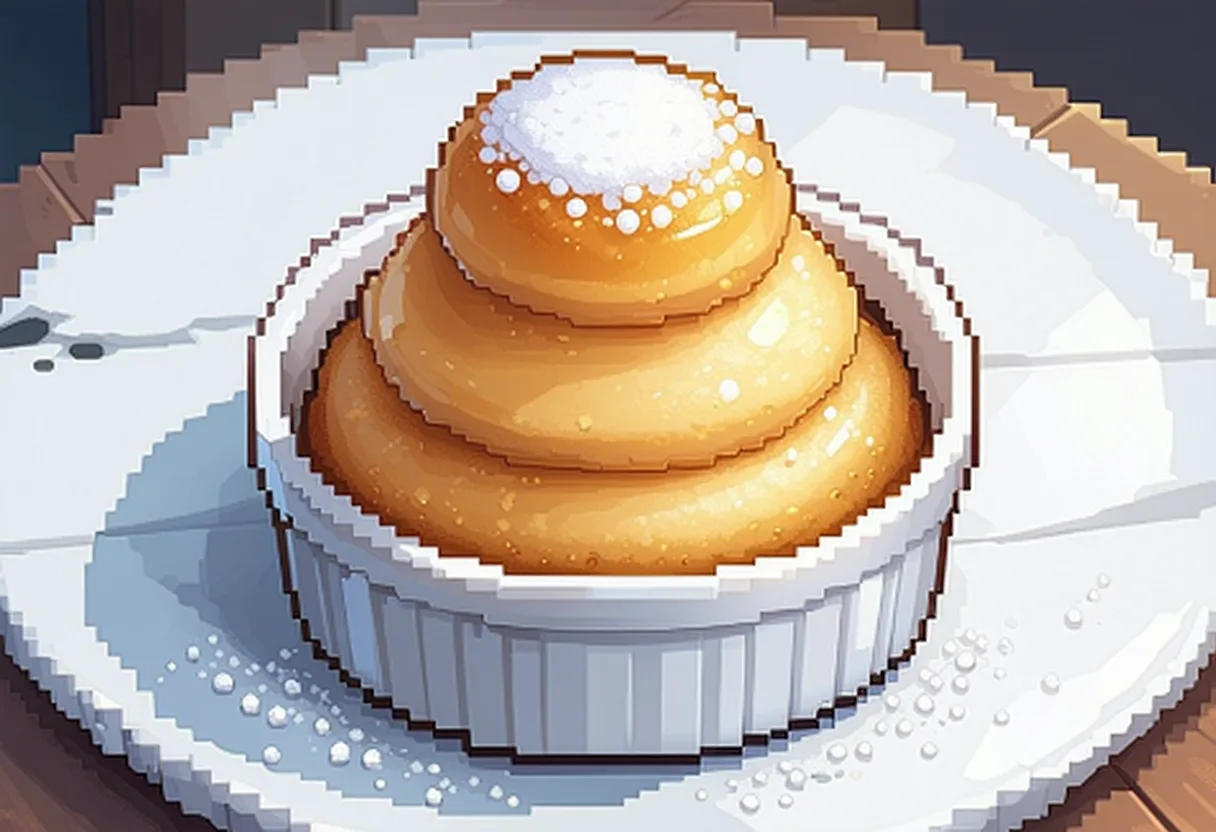
Bake on the preheated tray for 12–14 minutes until the souffles have risen 3–4cm above the rim and the tops are deep golden but the centres still carry a slight wobble when the tray is gently nudged.
Dust immediately with icing sugar and serve at once — souffles will begin to deflate within 2–3 minutes of leaving the oven.


