
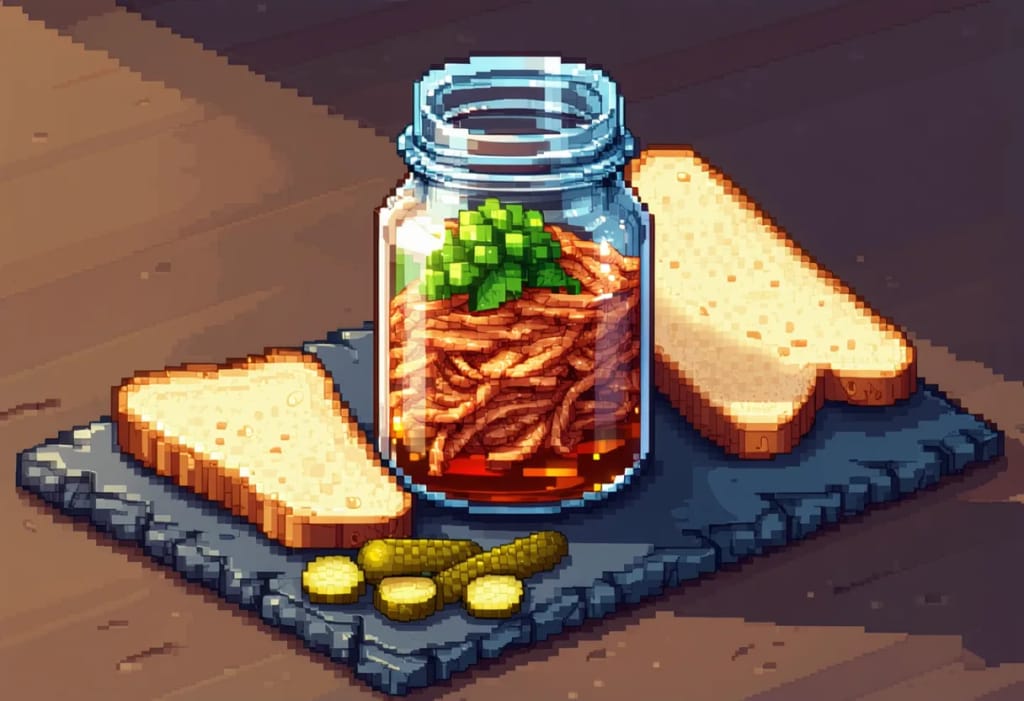
Rillettes du Mans
286 min · 10 steps
Hard: over 60 min or 12+ steps
About this dish
Slow-rendered in its own fat at a barely trembling heat — the Le Mans method — this pork rillettes achieves a silky, fibrous texture by hand-shredding rather than blending, then folding in the rendered fat to create a spreadable, deeply porky paste that rivals anything from the charcuteries of the Sarthe. Sealed under its own fat and refrigerated, it keeps for weeks unopened but only a few days once the seal is broken.
Allergy Info
Sulphites
Diet Info
Meat
Ingredients
Fresh Produce
- Garlic cloveslightly crushed4 clove
Meat & Poultry
- Pork Bellyskin removed, cut into 4cm cubes800 g
- Pork shouldercut into 4cm cubes400 g
- Pork Back Fatcut into 1cm cubes200 g
Dairy & Eggs
- Lardor neutral oil, for greasing1 tsp
Dried Goods
- Water150 ml
Spices & Seasonings
- Bouquet garni2 bay leaves, 4 sprigs thyme, 4 sprigs flat-leaf parsley, tied1 whole
- Fine sea saltplus more to taste1 tsp
- Black pepperfreshly ground1 tsp
- Ground Allspice¼ tsp
- Nutmegfreshly grated¼ tsp
Oils & Condiments
- Dry white winesuch as Muscadet or Vouvray150 ml
Utensils
- Dutch Oven
- Probe thermometer
- Fine sieve
Method
Combine the pork belly, pork shoulder, back fat, white wine, water, bouquet garni, garlic, salt, pepper, allspice and nutmeg in a large heavy-bottomed Dutch oven. Toss to coat evenly.
Cover and refrigerate for 12 hours to allow the wine and spices to begin seasoning the meat.
Remove from the refrigerator and bring to room temperature. Place the Dutch oven over medium heat, uncovered, until the liquid begins to simmer — about 10 minutes — then reduce the heat to the lowest possible setting. The surface should barely shiver, not bubble. Cover with a lid left slightly ajar.
Cook at this very gentle heat for 4 hours, stirring every 45 minutes to prevent sticking, until the meat is completely tender and falling apart and the fat has rendered to a clear, pale golden liquid. Verify with a probe thermometer: the meat should register at least 95°C, well past the 63°C safe minimum for pork — only sustained heat above that breaks the collagen down enough to shred.
Remove and discard the bouquet garni and garlic cloves. Using a slotted spoon, lift all the meat into a large bowl. Pour the rendered fat through a fine sieve into a separate bowl and reserve.
While the meat is still warm, use two forks — or your fingertips — to shred it into long, coarse fibres; pull with the grain of the meat rather than pressing or mashing. The texture should be distinctly stranded, not a paste.
Gradually fold in the reserved rendered fat, a few tablespoons at a time, working it into the shredded meat until the mixture is cohesive, moist, and just holds its shape when pressed. Taste and adjust salt and pepper.
Pack the rillettes tightly into sterilised glass jars or a ceramic terrine, pressing down firmly to eliminate air pockets. Smooth the surface and pour a thin layer of the remaining fat over the top to seal.
Cover and refrigerate for at least 24 hours before serving to allow the fat to set and the flavours to mellow and deepen. Sealed under fat and kept chilled, the jars keep for weeks unopened, but once the seal is broken, eat within 4–5 days.
Serve at room temperature — remove from the refrigerator at least 30 minutes before serving — spread generously on toasted sourdough or sliced baguette, alongside cornichons and Dijon mustard.