71min 4 ppl

64 min · 12 steps
Hard: over 60 min or 12+ steps
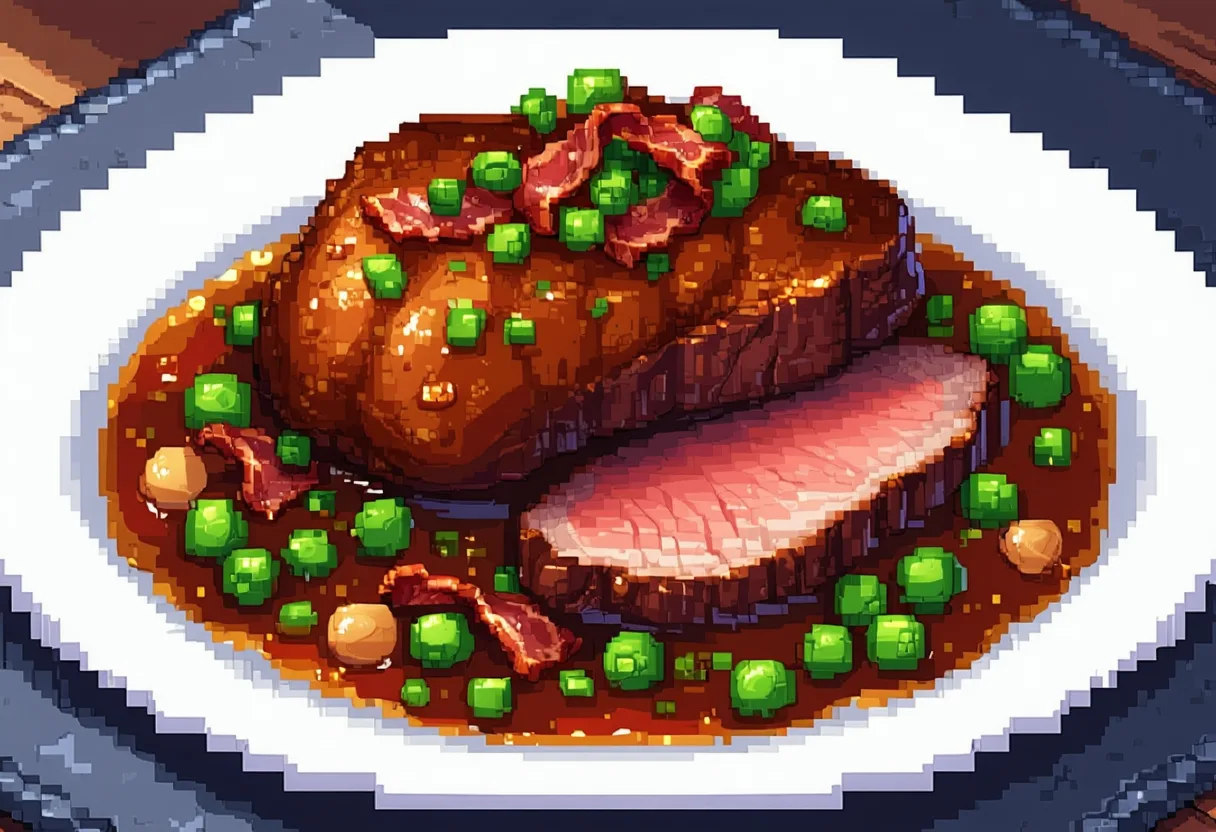
Whole squab pigeons are pan-roasted to a blushing, juicy pink, then rested over a braise of lardons, spring onions, and fresh peas finished with a glossy, reduced fond — the classic French technique of using the roasting pan juices directly into the braised vegetables that elevates this from a simple bird-and-peas dish to something genuinely restaurant-worthy.
Dairy, Celery, Sulphites
Meat
Fresh Produce
Meat & Poultry
Dairy & Eggs
Tins & Jars
Dried Goods
Spices & Seasonings
Oils & Condiments
Season the pigeons generously inside and out with sea salt and black pepper at least 30 minutes before cooking. Truss loosely with kitchen twine to keep the legs tucked against the body. Peel the pearl onions, shell the peas, tear the lettuce, cut the spring onions, and measure out all remaining ingredients.
Rest the seasoned pigeons uncovered at room temperature for 30 minutes.
Heat the oil and 1 tablespoon of butter in a large, heavy-based casserole or Dutch oven over high heat until the butter foams and subsides. Place the pigeons breast-side down and sear until deep golden brown, about 3–4 minutes, then turn onto each side for 1 minute each, and finally onto the back for 1 minute. Remove the pigeons to a plate.
Reduce heat to medium. Add the lardons to the same casserole and cook, stirring occasionally, until the fat renders and the edges turn lightly golden, about 5 minutes.
Add the pearl onions and cook, stirring, until they begin to colour at the edges, about 4 minutes.
Pour in the white wine and scrape up all the caramelised bits from the base of the pan with a wooden spoon. Simmer until the wine has reduced by half, about 3 minutes.
Add the chicken stock, bouquet garni, and sugar. Bring to a gentle simmer, then nestle the pigeons breast-side up back into the casserole. The liquid should come halfway up the birds.
Cover with a lid left slightly ajar and cook over a low, steady simmer until a meat thermometer inserted into the thickest part of the thigh reads 60°C for a rosy, pink finish — the traditional way to serve pigeon, and a choice that carries the usual risk of undercooked poultry — or 74°C if you prefer it cooked through to the standard safe temperature for poultry. This takes approximately 18–22 minutes. Use a meat thermometer — do not rely on timing alone.
Remove the pigeons, tent loosely with foil, and rest for 8 minutes.
While the pigeons rest, add the peas, spring onions, and torn lettuce to the casserole. Cook uncovered over medium heat, stirring gently, until the peas are just tender and the lettuce has wilted, about 4 minutes.
Remove the bouquet garni. Swirl in the remaining tablespoon of cold butter to give the braising juices a light gloss. Taste and adjust seasoning.
Remove the twine from the pigeons. Arrange each bird over the braised peas and lardons, spoon the juices liberally over the top, and scatter with chopped parsley. Serve immediately with crusty bread or pommes vapeur alongside.